
Accessibility Info For Hearing First Cambridge Facility
This Page Last Updated - 6 August 2026 14:48
Waxfree Guarantee™: The only ear wax removal clinic in Cambridge offering the Waxfree Guarantee™.
We are the only specialist microsuction ear wax removal clinic in Cambridge offering Microsuction Earwax Removal and Manual Instrument Earwax Removal, delivered by our expert Audiologists. Every earwax removal practitioner is carefully selected by our founder, Jason Levy, because we believe great care starts with the right people. In practice, that means you are in the hands of a team focused on precision, reassurance, and experience.
Our convenient Cambridge, Kent location also serves Willesborough Lees, Repton Manor, Repton Park, Godinton, Singleton, Beaver Green, Newtown, South Willesborough, Mersham, Cheeseman’s Green, The Forstal, Smeeth, Hinxhill, West Brabourne, Brabourne Lees, Brook, Wye, Kempe’s Corner, Boughton Lees, Eastwell, Westwell, Ram Lane, Hothfield, Daniel’s Water, Chilmington Green, Maidstone, Kennington, Kingsnorth, Charing, Lenham, Smarden, Biddenden, Tenterden, Woodchurch, Lympne, Dymchurch, Shadoxhurst, Bethersden, Smarden, Westwell, Wye, Challock, Leaveland, Sheldwich, Chilham, Petham, Elham, Barham, Denton, Hawkinge, Newington, Aldington, Bonnington, Hamswtreet, High Halden, Great Chart, Canterbury, Hythe, Folkestone, Dover and New Romney, as well as other towns and villages in Kent.
Getting Around the Cambridge Clinic with Confidence
Hearing First Cambridge is set up to make specialist ear care feel straightforward from the moment you plan your visit. The clinic offers audiologist-led ear wax removal, including microsuction and manual instrument techniques, alongside practical access arrangements that can help people who find travel, parking, or entering a building more difficult. If you use a wheelchair, arrive with a carer, or simply prefer a calmer approach to your appointment, the layout and on-site parking may help make the visit feel less demanding. Accessibility is not just about getting through the door, it can also lower stress before treatment, which is especially useful when blocked ears or reduced hearing are already making life feel harder.
For many patients, the most helpful information is the most practical: how to arrive, where to park, and what kind of support may be available when you get there. At a hearing clinic, these details can shape the whole experience, particularly when wax build-up has made communication less easy. If you are looking for accessible audiology in Cambridge, this page is here to help you understand the practicalities of attending the facility, so you can arrive prepared and keep your attention on the treatment itself.
Parking, Entry and Step-Free Planning
Car Parks Near Hearing First Cambridge
- Co-op Carpark, approximately 0.6 miles from Hearing First Cambridge. View on Google Maps.
- CyclePoint, approximately 0.3 miles from Hearing First Cambridge. View on Google Maps.
- Cambridge Station Car Park, approximately 0.4 miles from Hearing First Cambridge. View on Google Maps.
Parking information and place links are provided by Google Maps. Check restrictions and charges locally.
Published Accessibility Features
- Wheelchair-accessible entrance
- Wheelchair-accessible parking
Accessibility details are provided by Google Maps. Contact the location to confirm individual requirements.
Turning up for an ear care appointment can feel much easier when you know the basics in advance. Cambridge Clinic on Sun Lane provides free on-site disabled parking, which can be especially helpful for patients with limited mobility, balance concerns, long-term pain, or transport difficulties. A short, predictable route from vehicle to clinic entrance can reduce strain, particularly when hearing loss makes busy surroundings feel tiring or disorientating. If you are coming with a companion, accessible parking can also make it easier for them to help you without any unnecessary rush.
Things Worth Thinking About Before You Travel
- Keep your booking details close to hand, as a calm and organised arrival often makes the rest of the appointment feel more manageable.
- Bring any walking aid, mobility equipment, or hearing device you normally rely on, so the team can take your needs into account during the visit.
- Allow extra time for parking, checking in, and settling before the appointment starts, especially if unfamiliar places make you feel tense.
- If you are sensitive to noise or need clearer communication, let the clinic know beforehand, because that can help the team adapt their approach.
- Check whether you would benefit from someone accompanying you, particularly if wax blockage has affected your balance, confidence, or your ability to follow instructions.
Accessible parking is only one part of a good patient journey, but it is often the detail that sets the tone. When travel is simpler, you are more likely to arrive relaxed and ready for assessment by a qualified audiologist.
How Much Does Ear Wax Removal in Cambridge Cost?
Published Payment Methods
- Credit cards
- Debit cards
- Contactless or NFC payments
Payment information may change. Confirm prices, insurance eligibility and accepted methods directly with the provider. Place attributes are provided by Google Maps.
Ear wax removal in Cambridge starts at £34. The price can vary depending on whether one or both ears are treated, whether you book at peak or off-peak times, and how far ahead you secure the appointment.
21 Interesting Facts About Cambridge
- Home to the Second-Oldest University in the English-Speaking World
Founded in 1209, the University of Cambridge has educated monarchs, scientists, writers, and world leaders — and remains one of the most prestigious institutions globally. - Over 100 Libraries Belong to the University
Cambridge University has more than 100 libraries, including the iconic University Library, which houses over 8 million books and receives a copy of every UK publication. - Eight Prime Ministers Studied Here
Cambridge has educated eight British Prime Ministers, including Sir Robert Walpole, Britain’s first official PM, and more recently Stanley Baldwin and Neville Chamberlain. - The Best Ear Wax Removal In Cambridge
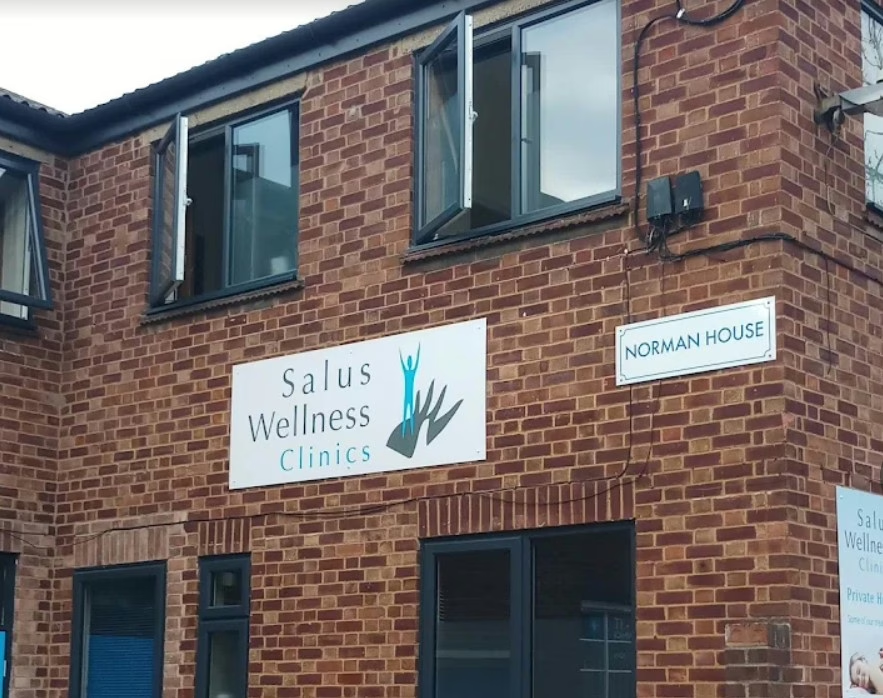
The UK’s premier ear wax removal and Audiology service, Hearing First, is available at Salus Wellness on Cambridge Place, just off Hills Road. You can click here to book an ear wax removal appointment in Cambridge with Hearing First. - Stephen Hawking Worked and Lived in Cambridge
The world-renowned physicist lived in Cambridge for most of his academic life and was Director of Research at the Centre for Theoretical Cosmology until his death in 2018. - The Rules of Football Were Codified Here
The Cambridge Rules, created in 1848, were an early attempt to standardise football and helped shape the modern game we know today. - Punting on the River Cam is a Local Tradition
Punting — pushing a flat-bottomed boat along the river using a pole — is one of Cambridge’s most iconic activities, particularly along the stretch known as The Backs, behind the colleges. - Cambridge Has Over 30 Colleges
The University is made up of 31 autonomous colleges, each with its own history, traditions, and famous alumni. King’s, Trinity, and St John’s are among the most recognisable. - Home to the Cavendish Laboratory
The Cavendish Laboratory, founded in 1874, is where many groundbreaking scientific discoveries occurred — including the structure of DNA by Watson and Crick in 1953. - First Computer Programmers Studied Here
Cambridge played a major role in early computing. Alan Turing, father of computer science, studied at King’s College, and the university remains a leader in AI research today. - Birthplace of the Hovercraft
Inventor Christopher Cockerell, who developed the hovercraft, was educated at Cambridge and conducted some of his early tests using a vacuum cleaner and kitchen scales. - Isaac Newton Studied and Taught at Trinity College
One of the greatest scientific minds in history, Sir Isaac Newton, formulated his laws of motion and gravity during his time in Cambridge, under the famous apple tree story. - Over 90 Nobel Prizes Have Been Awarded to Cambridge Affiliates
Cambridge University boasts over 90 Nobel Laureates across disciplines including physics, medicine, literature, and peace — more than any other university outside the US. - The Mathematical Bridge Has No Nails (Kind Of)
The Queen’s College Mathematical Bridge is a wooden structure famous for being held together by precision engineering — although modern nails have since been added during repairs. - Cambridge Has a Rich Literary History
Writers like Sylvia Plath, Zadie Smith, and A.A. Milne studied here. Lord Byron also famously kept a pet bear while at Trinity College because dogs were not allowed. - The Corpus Clock Tells Time — and Eats It
Installed in 2008, the Corpus Clock is a bizarre and beautiful creation featuring a metal “Chronophage” (time-eater) insect devouring time as it ticks. It’s both mechanical marvel and artistic metaphor. - Trinity College Owns Newton’s Apple Tree Clone
A tree grown from a cutting of Isaac Newton’s original apple tree stands in Trinity’s gardens — a living tribute to the moment that changed science forever. - Cambridge Is a Cycling Capital
Over a quarter of Cambridge residents cycle to work or school, giving it one of the highest cycling rates in the UK — and making bicycles a central part of its cityscape. - The First Colour Photo Was Developed Here
James Clerk Maxwell, who developed the first durable colour photograph, conducted part of his ground-breaking research in Cambridge in the 1860s. - Home to a Real-World Hogwarts-Style Dining Hall
Many Cambridge college dining halls, especially at Christ’s and Trinity, resemble those in *Harry Potter* — with long wooden tables, candelabras, and portraits lining the walls. - The University Has No Central Campus
Unlike most universities, Cambridge is spread throughout the city. Its colleges, departments, libraries, and student housing are intertwined with the rest of Cambridge life.
Helping Patients with Hearing Loss or Communication Needs
Accessibility in a hearing clinic should cover much more than parking or ramps. Many people attending for ear wax removal are already coping with muffled hearing, tinnitus, or ear fullness, so communication can matter just as much as physical access. Staff should be ready to speak clearly, face the patient when giving instructions, and repeat important points if needed. Written information can also be useful, especially if you find reading easier than following speech in a busy environment.
Useful Ways to Make Communication Easier
If you need more time to answer, prefer a quieter room, or rely on lip reading, those adjustments can make a real difference. Hearing care appointments are usually more effective when the setting supports clear conversation and the patient feels able to ask questions without pressure. That is particularly relevant before microsuction, when the audiologist may explain what will happen, how long it may take, and what sensations are normal. A good clinic will treat communication support as part of the care, not as an optional extra.
When to Explain What You Need
Let the team know about your communication needs as soon as you arrive, or earlier if you already know them. Simple measures, such as facing you directly, speaking one person at a time, or giving information in writing, can improve understanding and help the appointment run more smoothly.
Services We Offer Are:
- Manual Instrument Ear Wax Removal
- Microsuction Ear Wax Removal
Hearing First Cambridge
Cambridge CB2 1NS
Phone: +448001337987
URL: https://www.hearingfirst.co.uk/book-ear-wax-removal-near-me/book-microsuction-ear-wax-removal-cambridge/
Professional ear wax removal Cambridge Audiologists. Conveniently located in Cambridge Clinic on Sun Lane, with free on-site disabled parking. We are the only ear wax removal clinic in Cambridge that offer The Hearing First Waxfree Guarantee™, so if you have a blocked ear, come to our ear wax removal Cambridge clinic. We really are the ear wax removal experts in Cambridge.
Access and Ear Wax Removal at Cambridge Clinic
Hearing First Cambridge offers specialist ear wax removal at its Cambridge Clinic on Sun Lane. For visitors who need a more convenient arrival, the site includes free disabled parking on the premises. That can make attending an ear care appointment simpler for people with reduced mobility, as well as for anyone travelling with a companion.
- Microsuction and manual instrument removal options
- Specialist ear wax care delivered by Audiologists
- Free on-site disabled parking for eligible visitors
- A clinic location serving Cambridge and surrounding Kent communities
The clinic provides two established methods for removing troublesome wax, allowing the Audiologist to consider which option is most suitable for the individual appointment. If accessibility matters to your visit, contact the clinic before booking to talk through arrival, parking, and any practical support you may need. Sharing those requirements early can help you plan a more comfortable visit and focus on easing blocked-ear symptoms with confidence.
What to Expect from an Accessible Ear Wax Removal Visit
Research Catalogue Results for Ear Wax Removal
- The auricular cough reflex: lateralization, prevalence, procedural determinants, and the role of examiner handedness. - van de Loo J, Mayer M, Sharaf K, Eckel H, Jansen L, Klussmann JP, Luers JC., 2026.
- High-definition otoscopic device for humanitarian mission: how i do it. - Lechien JR, Maniaci A, Kipsang MJ, Kibor M, Vaira LA., 2025.
- Use of Castor Oil in Dermatology: A Narrative Review. - Girdler K, Cabatu A, Olds H, Potts GA., 2026.
Source: Europe PMC. These are bibliographic matches, not personalised medical advice or an endorsement of a treatment.
Knowing how an appointment is likely to unfold can reduce uncertainty, which matters for many people with hearing difficulties, anxiety, or sensory sensitivities. At Hearing First Cambridge, the process usually begins with an assessment of the ear canal and wax build-up, followed by the most appropriate removal method. Microsuction is often selected for precision, while manual instrument removal may suit other cases. The clinical choice depends on what the audiologist sees and how your ears respond on the day.
Typical Stages of the Appointment
- Initial discussion about symptoms, previous ear problems, and any mobility or communication needs that may affect the visit.
- Visual examination of the ear canals, so the audiologist can assess wax position, quantity, and whether removal is suitable.
- Explanation of the recommended technique, including any sensations you might notice and how long the procedure may take.
- Careful removal of ear wax using the chosen method, with attention to safety, comfort, and your ability to pause if needed.
- Post-treatment guidance covering ear health, aftercare, and what to do if symptoms continue or return.
For people who feel uneasy in clinical settings, a clear sequence can be reassuring. It can also help patients with hearing loss, because written or spoken instructions are easier to follow when everything is explained step by step.
Safe, Comfortable Ear Wax Removal with an Audiologist in Your Local Area
Your ears and hearing are delicate, and they deserve expert care. Some providers delegate ear wax removal to lay people, treating it as a simple routine task. However, we believe it calls for the skill and judgement of a trained Audiologist.
At our clinic, only qualified Audiologists carry out ear wax removal, so your ears are cared for by a specialist with detailed knowledge of ear anatomy and physiology. That helps minimise the risk of injury and supports a safe, effective procedure tailored to your needs. Your hearing is too important to leave to chance, and we are committed to providing a high standard of care.
Hearing First Cambridge – Microsuction Ear Wax Removal Cambridge Cb2 Map
Accessibility for Different Patient Needs
People attend ear wax removal clinics for many reasons, and access needs can vary considerably. Some patients have reduced mobility, while others are autistic, hard of hearing, recovering from illness, or simply anxious about treatment. A clinic that takes accessibility seriously should be able to support these different needs without making the visit feel awkward or overcomplicated. Often, the most helpful adjustments begin with listening to the patient and responding to what would make the appointment easier.
Common Needs the Clinic Should Be Ready For
- Patients who need parking near the entrance because walking long distances worsens pain, fatigue, or breathlessness.
- People who need clear spoken instructions because hearing loss, wax blockage, or tinnitus makes ordinary conversation harder to follow.
- Visitors who prefer minimal waiting time, since uncertainty and crowded spaces can raise stress before treatment.
- Patients with a companion who may need to help with mobility, reassurance, or note-taking during the consultation.
- People who benefit from a quieter pace, because sensory overload can make the visit harder than the procedure itself.
Accessible healthcare is never one-size-fits-all. At a hearing clinic, small changes can have a big effect, particularly when the patient’s ears are already affected by blockage or discomfort.
More Information
You can find more information about arranging ear wax removal in Cambridge here.
Preparing for a More Comfortable Appointment
Good preparation can make ear wax removal feel less daunting and more efficient. If you know in advance that the clinic offers disabled parking and audiologist-led treatment, you can plan your journey with greater confidence. It also helps to think about what makes you feel settled in medical settings. Some patients like to arrive early, others prefer to minimise waiting, and many feel better when they know exactly who will be providing the care. Preparation is especially useful if your hearing has been reduced for some time, because communication often takes more effort once wax has built up.
Practical Steps That May Help
Wear comfortable clothing, bring any hearing aids or assistive devices you use, and write down questions before you travel. If you need support with mobility, communication, or understanding aftercare instructions, mention it at the start of the appointment so the audiologist can respond appropriately.
Why This Matters for Hearing Care
Preparation supports patient safety and helps the appointment move at a pace that suits you. It also gives the audiologist a better sense of how to shape the consultation, whether that means speaking more slowly, allowing extra time, or checking that you have understood the advice before you leave.